


Slope Intercept Form Graphing Worksheets Black And White Overview
Math can be a tricky subject for many, and sometimes all you need is a simple tool to help you grasp a concept. That's where finding slope from a graph worksheet comes in handy! It's a practical way to reinforce your understanding of slopes, especially when you have a visual representation to work with. If you've been struggling with identifying slopes from graphs, you might want to check out some resources like finding slope worksheets printable or even the 28 Decimal Multiplication Worksheets for Practice to build your math skills.
Practice with parallel and perpendicular lines.
Understanding Slopes Visually
A finding slope from a graph worksheet is an excellent tool for learners to visually grasp the concept of slopes and their applications. It provides a practical way to analyze linear relationships and understand the rate of change between variables. By working with graphs, learners can develop a deeper understanding of how slopes indicate the steepness of a line and how this relates to real-world scenarios.
Calculate slope from a graph.
This worksheet type is particularly beneficial for visual learners who benefit from seeing concepts in action. It allows students to connect abstract mathematical concepts with visual representations, making learning more engaging and intuitive.
Advanced table-to-slope practice.
Beyond Basic Slope Calculations
While finding slope from a graph worksheet often focuses on the fundamental skill of calculating slopes, it can also introduce more advanced concepts. These worksheets can include questions that explore the y-axis intercept, which is a crucial aspect of linear equations. By understanding the y-intercept, learners can interpret the point where a line crosses the y-axis and its significance in graph analysis.
Identify slope from a graph.
Additionally, more complex worksheets may involve identifying slope from a graph that has multiple lines or non-linear curves. This challenges students to differentiate between various lines and understand the unique characteristics of each. It encourages critical thinking and a deeper understanding of graph analysis.
Slope calculation: graph-based worksheet.
How Do You Find the Slope of a Line on a Graph?
One common question that arises when working with slopes is how to accurately determine the slope of a line on a graph. The process involves identifying two points on the line and calculating the rise over run, which is the vertical change over the horizontal change. This calculation provides the slope, indicating the steepness of the line.
Speed-time graphs: a fun challenge.
For instance, if a line rises 5 units and runs 2 units, the slope would be 5/2, or 2.5. This simple calculation is a fundamental skill in graph analysis and is essential for understanding linear relationships.
Linear functions: y = mx practice.
Practicing with Worksheets: Tips and Strategies
When using a finding slope from a graph worksheet, it's important to approach the practice with a strategic mindset. Here are some tips to make the most of these worksheets:
Line graphs for Year 7 students.
- Start with simpler graphs and gradually progress to more complex ones. This allows for a gradual build-up of skills and confidence.
- Focus on understanding the concept of rise over run and how it relates to the steepness of a line. This foundational understanding will benefit learners as they encounter more advanced topics.
- Encourage learners to identify patterns and trends in the graphs. This promotes critical thinking and a deeper engagement with the material.
- For more advanced learners, introduce worksheets that require them to identify slopes from graphs with multiple lines or curves. This challenges their understanding and encourages them to differentiate between various linear relationships.
- Practice regularly and consistently. Repetition is key to mastering any skill, and slope calculation is no exception.
Free worksheet: slopes of lines.
Applying Slope Analysis in Real-World Scenarios
The skill of finding slope from a graph is not just an academic exercise; it has real-world applications. Understanding slopes and their calculation is essential in fields like physics, engineering, and economics. For example, in physics, slopes can represent the rate of change of velocity, acceleration, or other variables. In economics, slopes can indicate the rate of change in supply and demand curves.
Graph-based slope finding practice.
By mastering the skill of finding slope from a graph, learners develop a valuable tool for analyzing data and making informed decisions. It equips them with the ability to interpret visual representations of data and understand the underlying mathematical relationships. This skill set is transferable and can be applied across various disciplines, making it a valuable asset for lifelong learning.
Slope of a line: graph worksheet.
More graph-based slope calculations.
So, there you have it! Visualizing slopes through graphs is an awesome way to learn and apply this mathematical concept. It's like discovering a hidden treasure map, where each graph is a clue leading you to a deeper understanding of linear relationships.
Why not give it a go and see how you get on with a finding slope from a graph worksheet? It's a fun and practical way to enhance your math skills. Leave a comment or share your experience below; we'd love to hear how it went for you!
Finding slope: graph-based exercises.
Related: 29 Worksheet Ideas for Slope Intercept Form
As a parent, I'm always on the lookout for resources to support my child's learning journey. Slope intercept form worksheets are a great find! These practical tools can really help kids grasp the concept of slope and intercepts, which can be tricky. It's a simple yet effective way to practice, and I love how it offers a hands-on approach. I even found a useful slope intercept form worksheet pdf online, which was a lifesaver for a quick print-out!
Writing linear equations, a step-by-step guide.
Unlocking Linear Equations: Mastering the Slope Intercept Form
One of the most powerful tools in a math student's arsenal is the slope intercept form. It's a simple yet versatile method to express linear equations, and it's a key concept for understanding graphs and relationships between variables. The slope intercept form worksheet is an excellent resource to help learners of all ages grasp this fundamental idea.
Find the slope and y-intercept on this worksheet.
Beyond Basics: Advanced Worksheets for Linear Equations
While the slope intercept form is a basic concept, it's also a building block for more advanced math topics. As such, there are worksheets designed to cater to different skill levels and learner needs. For beginners, worksheets might focus on finding the slope and y-intercept from a given line, or identifying parallel lines and their equations. These foundational skills are essential for understanding the concept of linear relationships.
Convert standard form to slope-intercept.
As students progress, worksheets can become more challenging. They might involve graphing linear equations, writing equations from given information, or solving systems of equations using the slope intercept form. These activities encourage students to apply their knowledge in different scenarios and develop a deeper understanding of linear equations.
Excel import guide, not a math worksheet.
People Also Ask: What's the Best Way to Use a Slope Intercept Form Worksheet?
The beauty of a slope intercept form worksheet is its versatility. It can be used in various educational settings, from classrooms to homeschooling, and even as a self-study resource. Teachers can incorporate these worksheets into their lesson plans to reinforce concepts and provide practical examples. Homeschooling parents can use them to guide their children's learning and ensure they're on track.
Identify the slope-intercept form in this exercise.
For tutors, these worksheets are a valuable tool to assess a student's understanding and identify areas that need improvement. They can also be used as a quick review or as a way to introduce a new topic, providing a hands-on approach to learning. And for students studying independently, worksheets offer a structured way to practice and reinforce their skills.
Write equations in slope-intercept form.
How to Make the Most of Your Slope Intercept Form Worksheet
When using a slope intercept form worksheet, it's important to consider a few practical aspects. First, decide on the appropriate level of difficulty for your student or yourself. Start with simpler problems and gradually increase the challenge as confidence and understanding grow.
Solve equations to find the slope and y-intercept.
Printing the worksheets is also a consideration. While online versions are convenient, having a physical copy can be beneficial, especially for students who prefer writing by hand. Many websites offer slope intercept form worksheet pdf downloads, allowing for easy printing.
Graphing linear functions, a visual approach.
Additionally, consider the layout and format of the worksheet. Some may have a more traditional problem-solving approach, while others might incorporate visual elements or real-world scenarios. Varying the format can keep students engaged and help them see the practical applications of the slope intercept form.
Find the slope and y-intercept from equations.
Real-World Applications: Graphing Linear Equations
One of the most practical uses of the slope intercept form is graphing linear equations. By understanding the concept of slope and intercepts, students can visualize and interpret data in a meaningful way. This skill is not only useful in math but also in various real-world situations, such as understanding trends, predicting outcomes, and making informed decisions based on data.
Free practice: writing equations in slope-intercept form.
For example, imagine a scenario where a student is tracking the growth of a plant over time. By collecting data on the plant's height at different intervals, they can plot these points on a graph and use the slope intercept form to find the equation of the line. This equation represents the growth rate of the plant, allowing the student to make predictions and understand the plant's development.
Convert standard form to slope-intercept practice.
In conclusion, the slope intercept form worksheet is a versatile and effective tool for mastering linear equations. It offers a hands-on approach to learning, catering to different skill levels and educational settings. By providing a structured way to practice and apply concepts, these worksheets empower students to unlock the secrets of linear relationships and develop essential math skills.
Slope-intercept form worksheets with solutions.
Hey there, math enthusiasts! We've explored the wonders of the slope-intercept form and its awesome potential. It's an incredibly useful tool, and I hope you feel inspired to tackle those linear equations head-on.
So, go ahead and give the slope-intercept form worksheet a try. It's a fun and engaging way to practice and reinforce your understanding. Who knows, you might even discover a new love for graphing and analyzing those linear relationships! Leave a comment or share your experience below; I'd love to hear how it goes for you.
Practice graphing lines with this printable.
Read also: 30 Dividing Decimals Worksheets
Related: Free Pythagorean Formula Worksheet for Students
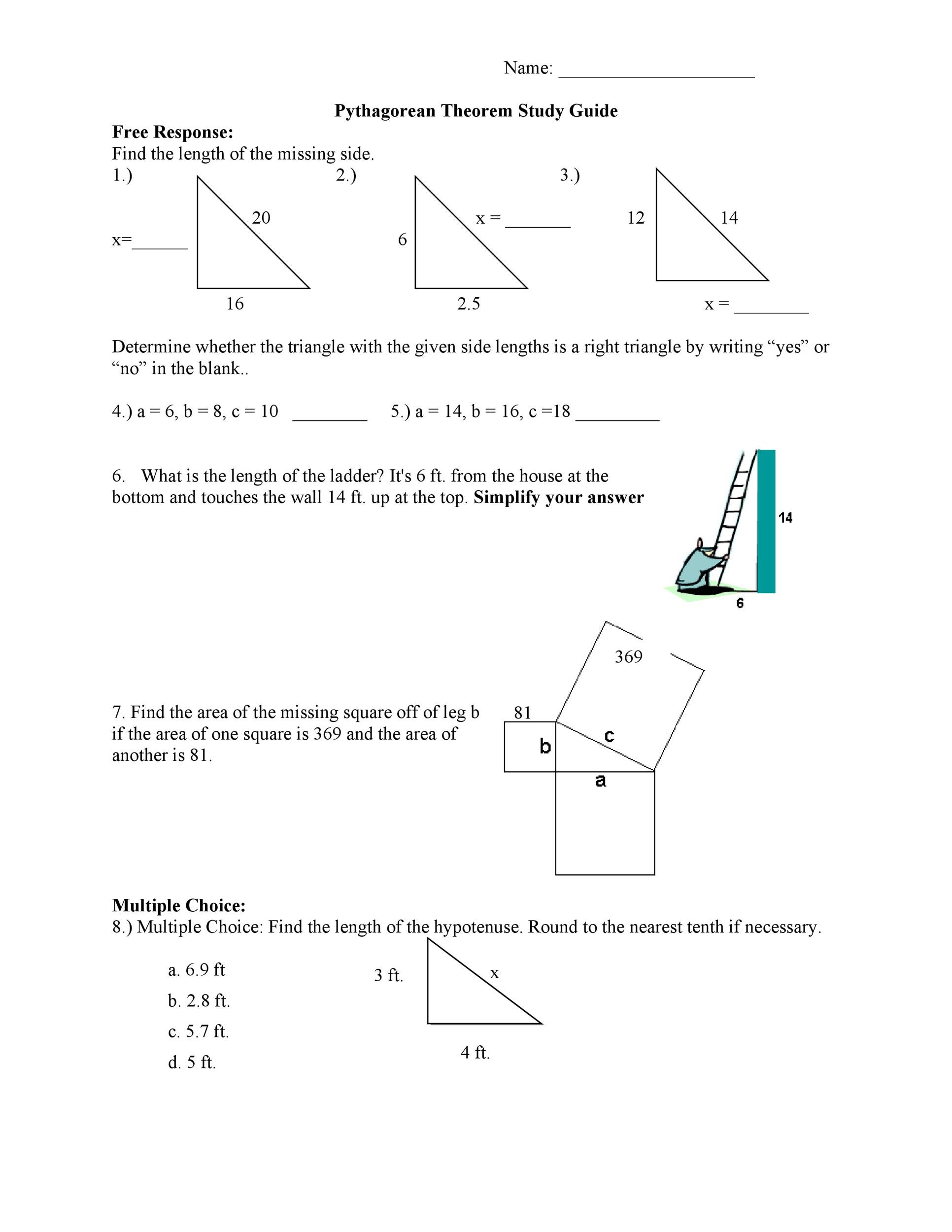
Sometimes, as parents or teachers, we just need a simple tool to help our kids grasp a concept. That's where a pythagorean formula worksheet can be a lifesaver! It's an easy, practical way to reinforce the Pythagoras theorem explained and its applications. With a worksheet, you can guide students through the steps, making math more accessible and less intimidating. 22 Free Worksheets for 1st Grade offer similar resources, so it's a great starting point for any learning journey!
Find volume using Pythagoras' theorem.
The Pythagorean Formula: A Powerful Tool for Math Learning
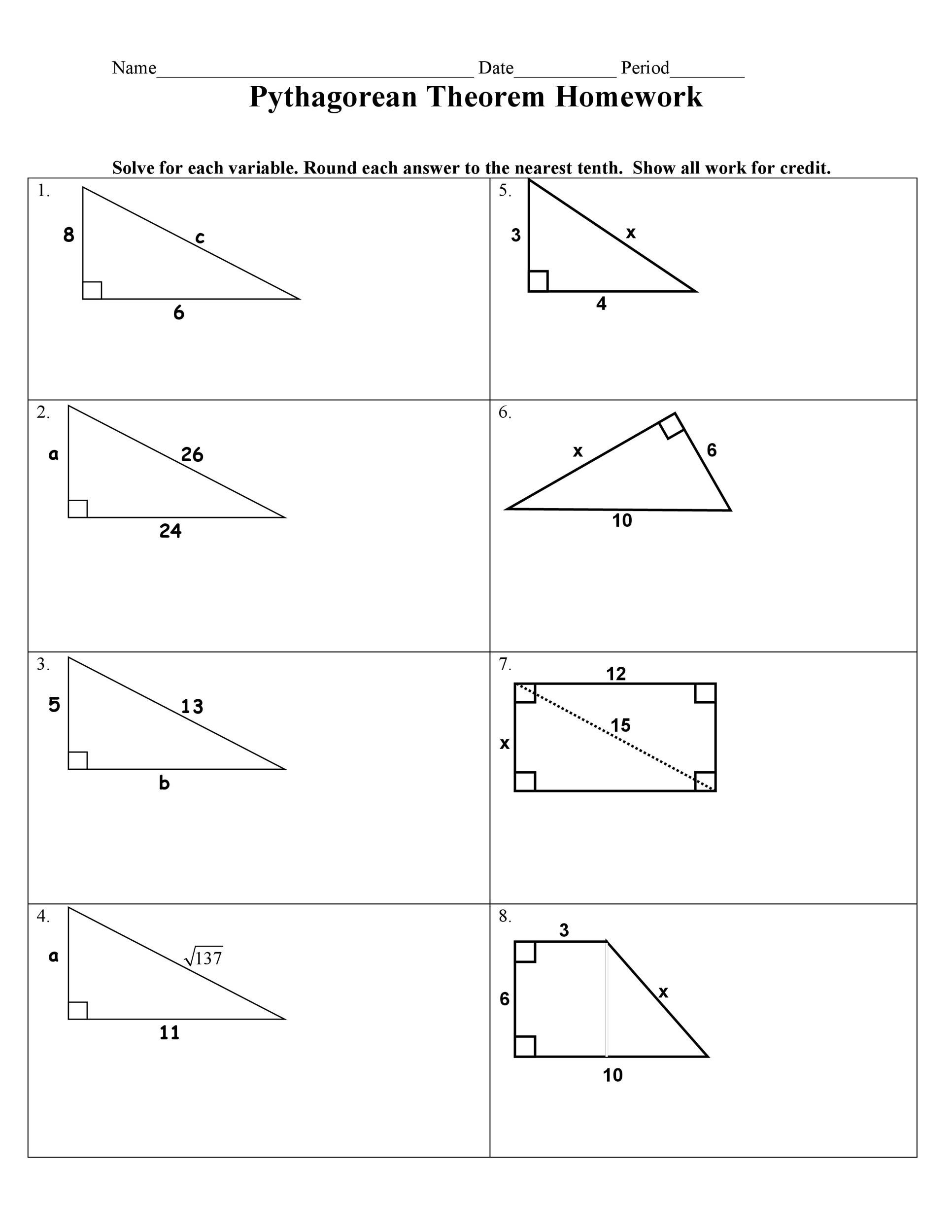
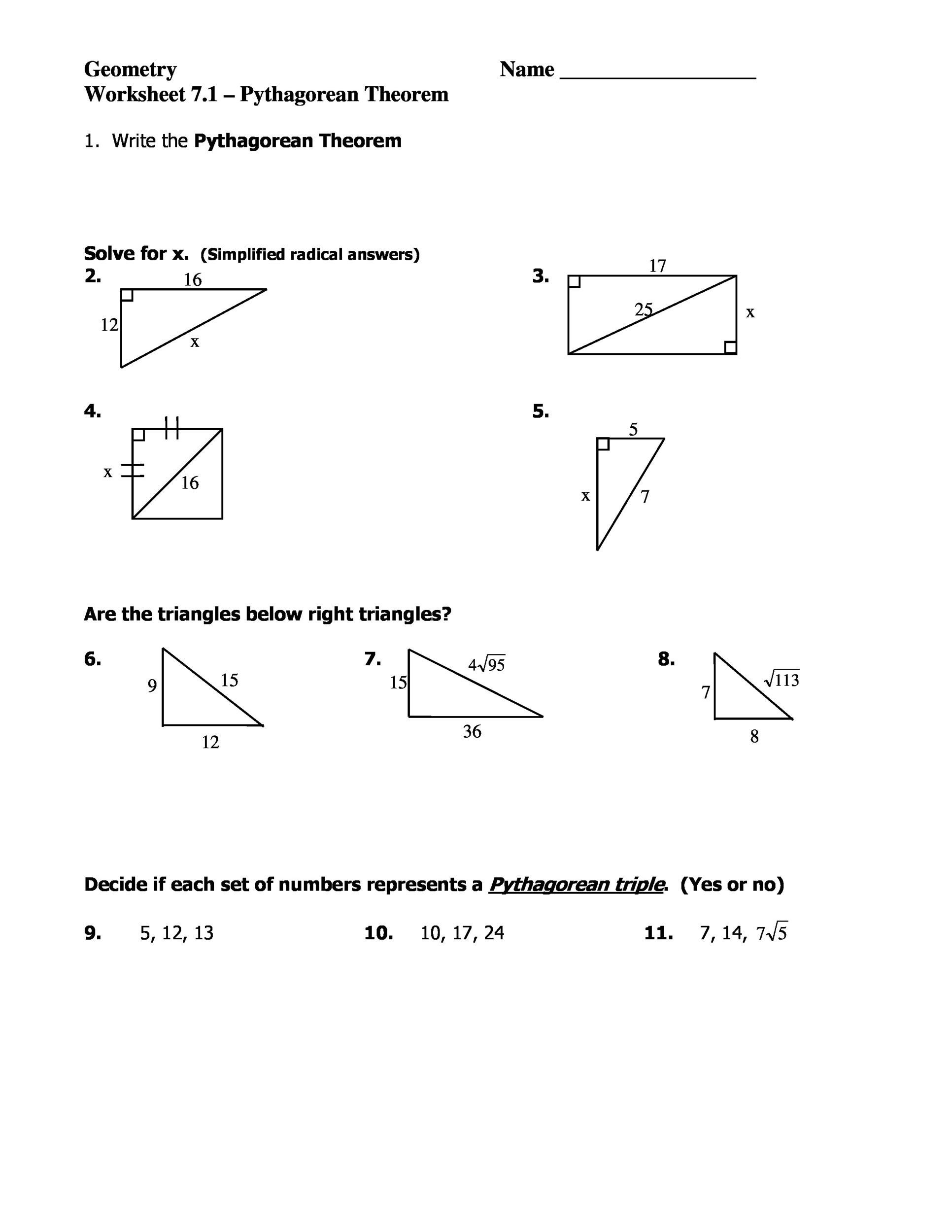
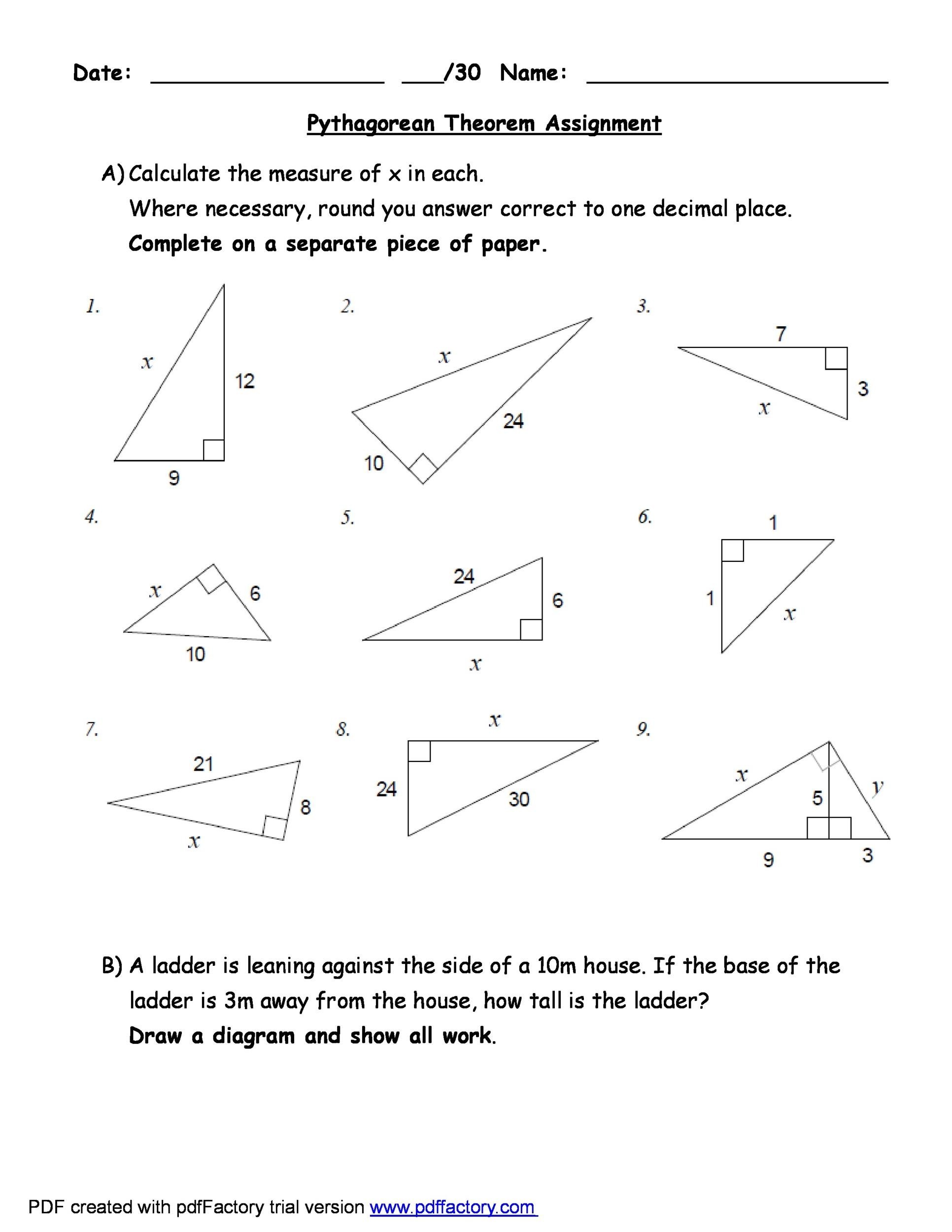
A pythagorean formula worksheet is an excellent resource for introducing and reinforcing the concept of the Pythagorean theorem. This theorem, a fundamental mathematical principle, is a powerful tool for understanding and solving problems related to right-angle triangles. By providing a structured and guided approach, worksheets make this theorem accessible and engaging for learners of all ages.
Missing hypotenuse: a Pythagorean challenge.
Exploring Different Worksheet Types and Skills
Pythagorean formula worksheets come in various formats, catering to different learning needs and skill levels. Some worksheets focus on the basic application of the theorem, guiding students through simple right-angle triangle scenarios. These worksheets often provide step-by-step instructions, helping students understand how to identify the hypotenuse and leg lengths and apply the formula to find unknown side lengths.
Verified solutions for theorem worksheets.
For more advanced learners, worksheets can introduce complex scenarios, such as triangles with decimal or fractional side lengths. These worksheets may also include word problems, challenging students to apply their understanding of the theorem in real-world contexts. Additionally, some worksheets focus on the proof of the Pythagorean theorem, offering a deeper exploration of its mathematical foundations.
Pythagorean theorem: word and PDF answers.
People Also Ask: What is the Pythagorean Theorem?
The Pythagorean theorem is a mathematical principle that describes the relationship between the sides of a right-angle triangle. It states that the square of the length of the hypotenuse (the side opposite the right angle) is equal to the sum of the squares of the other two sides (the legs). This theorem, often represented as a² + b² = c², is a fundamental concept in geometry and has numerous applications in various fields, from construction to engineering.
Pythagorean theorem: word and PDF answers.
How to Use and Practice with Pythagorean Formula Worksheets
Using a pythagorean formula worksheet is a straightforward and effective way to practice and reinforce this mathematical concept. Worksheets can be printed and used in a classroom setting, providing a structured and focused activity for students. Teachers can guide students through the worksheets, offering explanations and support as needed.
Pythagorean theorem: word and PDF answers.
For homeschooling or tutoring, worksheets can be a valuable resource for individual learners. Parents or tutors can work through the worksheets with the student, providing immediate feedback and ensuring a solid understanding of the theorem.
Pythagorean theorem: word and PDF answers.
When using worksheets, it's important to consider the learner's age and skill level. Worksheets can be adapted or chosen based on the learner's needs, gradually increasing the complexity as their understanding grows.
Pythagorean theorem: word and PDF answers.
Applying the Pythagorean Theorem: Practical Scenarios
Pythagorean formula worksheets offer a practical way to apply the theorem in various scenarios. For example, learners can use the theorem to find the height of a tree or building, the length of a diagonal across a room, or the distance between two points on a map. These real-world applications make the theorem more tangible and relevant, helping students see its practical value beyond the classroom.
Pythagorean theorem: word and PDF answers.
Additionally, worksheets can introduce the concept of square roots, a natural extension of the Pythagorean theorem. By understanding square roots, learners can further explore the relationships between side lengths in right-angle triangles and develop a deeper understanding of mathematical concepts.
Pythagorean theorem: word and PDF answers.
Easy Main Idea and Details Worksheets for Teachers can also be a useful resource to complement the learning journey, helping students identify the main idea and key details in various contexts, including mathematical principles like the Pythagorean theorem.
Pythagorean theorem: word and PDF answers.
Pythagorean theorem practice for teens.
So, there you have it! The Pythagorean formula worksheet is a fantastic way to engage with this essential mathematical concept. It's a great tool to have in your back pocket, and with practice, you'll be solving right-angle triangle problems like a pro.
Why not give it a go and see how you get on? Print out a worksheet, grab a pen, and start exploring. It's a fun and effective way to reinforce your math skills. And remember, the more you practice, the easier it becomes. So, leave a comment and share your experiences with us. We'd love to hear how you're getting on with your Pythagorean adventures!