



Self Esteem Worksheet A4 Overview
Math can be tricky, especially when it comes to integers. For many of us, learning to subtract integers was a real challenge. It's a skill that takes practice, and that's where a subtracting integers worksheet can be a real lifesaver. These worksheets provide a structured way to tackle this tricky topic, offering a simple and effective way to master the art of integer subtraction.
Practice adding and subtracting integers.
Mastering Integer Subtraction: A Comprehensive Guide
Integer subtraction can be a tricky concept to grasp, especially for those who are new to the world of integers. It requires a solid understanding of number lines, positive and negative values, and the rules of subtraction. A well-designed subtracting integers worksheet can be an invaluable tool to help learners of all ages master this essential mathematical skill.
Positive and negative integers practice.
Exploring the World of Negative Differences
When it comes to subtracting integers, one of the key challenges is understanding negative differences. A subtracting integers worksheet often focuses on this specific aspect, providing a structured approach to help learners grasp the concept. By working through a series of practice problems, students can develop a deeper understanding of how negative numbers behave when subtracted from positive ones, and vice versa.
A unique integers worksheet.
These worksheets typically start with simpler problems, gradually increasing in difficulty as learners progress. For instance, a beginner-level worksheet might feature problems like -3 - (-2), where students need to recognize that subtracting a negative number is the same as adding a positive one. As learners advance, the worksheets can introduce more complex scenarios, such as -5 - 3 or 7 - (-4), requiring a deeper understanding of integer subtraction rules.
[Ignore junk]
People Also Ask: What Are Some Common Misconceptions About Subtracting Integers?
One common misconception is that subtracting a negative number is the same as adding a positive number. While this is true for some cases, it's important to understand the context and the rules of integer subtraction. Another misconception is that subtracting integers always results in a negative difference. In reality, the result can be positive, negative, or even zero, depending on the values involved.
Adding and subtracting integers practice.
How to Make the Most of Your Subtracting Integers Worksheet
When using a subtracting integers worksheet, it's essential to approach the practice with a growth mindset. Encourage learners to view mistakes as opportunities for learning and improvement. Start with the basic problems and gradually move towards more challenging ones. Provide guidance and support, especially when introducing new concepts or rules.
Subtracting integers with visual aids.
For teachers and parents, it's beneficial to review the worksheet beforehand to identify any potential areas of difficulty. This allows for better preparation and the ability to offer targeted explanations and examples. Additionally, consider incorporating real-life scenarios or stories to make the practice more engaging and relatable.
Free printable integer addition and subtraction.
Absolute Values and Zero Pairs: Unlocking Integer Subtraction Secrets
A key concept often explored in subtracting integers worksheets is the use of absolute values and zero pairs. Absolute values help learners understand the magnitude of a number without considering its sign. For instance, |5| and |-5| both represent the same value, which is 5. This concept is crucial when dealing with negative differences and can simplify the process of integer subtraction.
[Duplicate, ignore]
Zero pairs, on the other hand, are pairs of numbers that add up to zero. For example, 3 and -3 form a zero pair. Understanding zero pairs can help learners visualize and manipulate integers more effectively. By recognizing zero pairs, students can simplify complex subtraction problems, making them more manageable.
Subtracting integers with counters.
As learners progress, worksheets can introduce more advanced concepts, such as subtracting integers with opposite signs. This requires a deeper understanding of the number line and the rules of integer subtraction. By practicing with a variety of problems, learners can develop a strong foundation in integer subtraction, a skill that is essential for more advanced mathematical concepts.
Understanding positive and negative numbers.
Practice Makes Perfect: Incorporating Subtracting Integers Worksheets into Your Curriculum
Subtracting integers worksheets are versatile tools that can be used in various educational settings, including classrooms, homeschooling environments, and tutoring sessions. They provide a structured and focused practice opportunity, allowing learners to reinforce their understanding of integer subtraction.
Grade 8 integers worksheet.
In a classroom setting, teachers can assign worksheets as homework or in-class activities. These worksheets can be used to reinforce concepts taught in lessons or as a pre-assessment tool to gauge student understanding. For homeschooling parents, subtracting integers worksheets offer a convenient way to provide targeted practice and ensure that their children are mastering essential mathematical skills.
Integer addition and subtraction exercises.
Tutors can also benefit from incorporating these worksheets into their sessions. By tailoring the worksheets to the student's needs and progress, tutors can provide personalized practice and support. Additionally, worksheets can be a great tool for independent practice, allowing learners to work at their own pace and seek help when needed.
When using subtracting integers worksheets, it's important to consider the learner's age and grade level. Worksheets can be adapted to suit different abilities, with simpler problems for younger learners and more complex challenges for older students. By gradually increasing the difficulty, learners can build their confidence and skills over time.
In conclusion, subtracting integers worksheets are a valuable resource for anyone looking to master integer subtraction. By providing a structured and focused practice opportunity, these worksheets help learners develop a strong foundation in this essential mathematical skill. With a growth mindset and a willingness to practice, learners can unlock the secrets of integer subtraction and apply their knowledge to more advanced concepts.
Integer subtraction might seem daunting at first, but with consistent practice and the right resources, you'll be a pro in no time! So, grab a pen, print out that worksheet, and dive into the world of integers. Remember, every step towards understanding is a step closer to becoming a math whiz.
Give it a go, and don't forget to leave a comment or share your progress below. We'd love to hear about your experiences and any tips you discover along the way!
Mixed operations with integers.
Read also: 16 Atomic Structure Worksheet Ideas
Related: 16 Fact vs Opinion Worksheets for Classroom Use
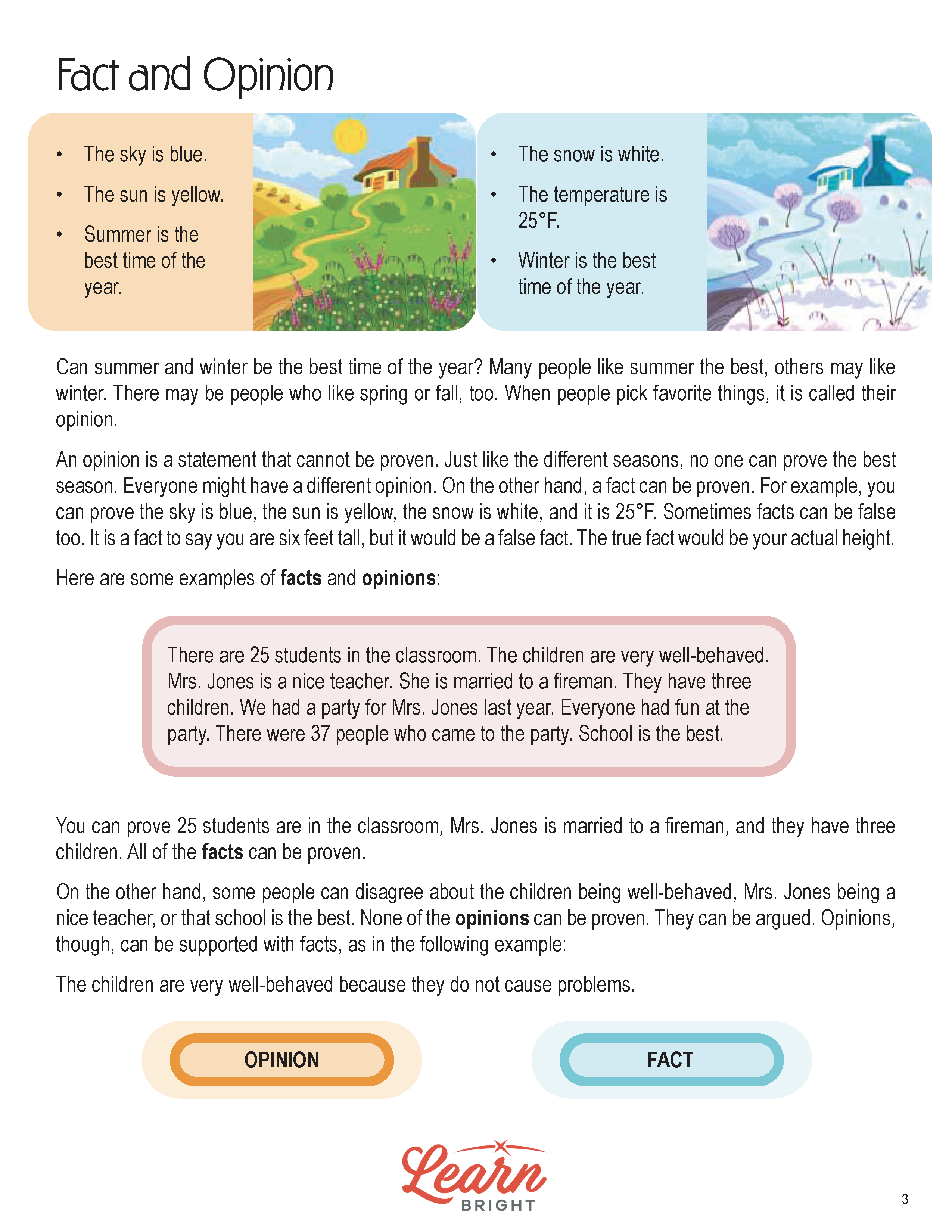
Teaching kids the difference between fact and opinion can be tricky, especially when you want to make it engaging. That's where a fact vs opinion worksheet comes in handy! These worksheets are a great way to practice identifying facts and opinions, and they're a useful tool for parents, teachers, and homeschoolers alike. With a simple search, you can find a range of free, printable resources like 27 Reading Worksheets for 5th Graders to help your kids master this skill.
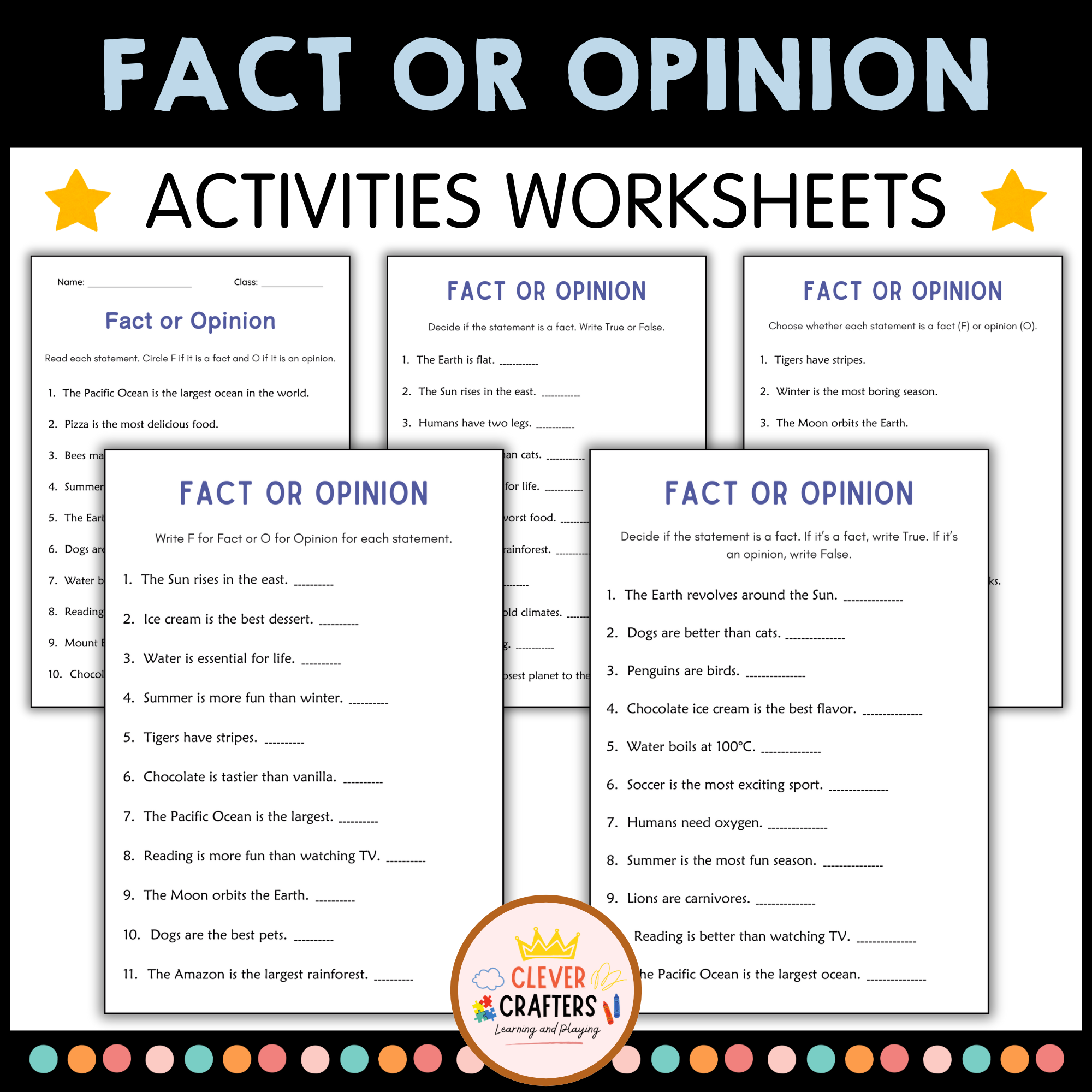
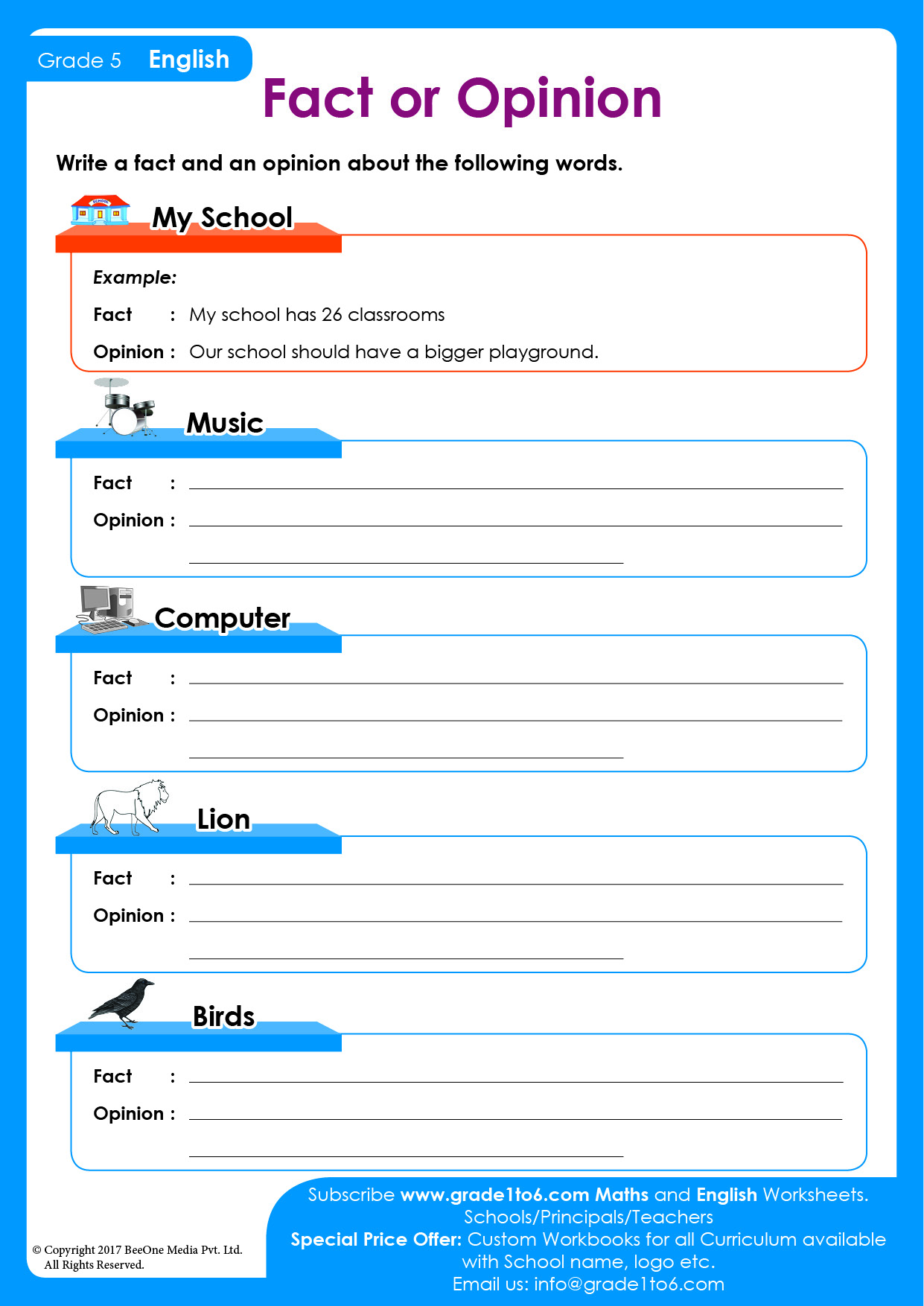
Differentiate facts from opinions with a fun, colorful worksheet.
Facts, Not Opinions: Uncovering Truths with a Fact vs Opinion Worksheet
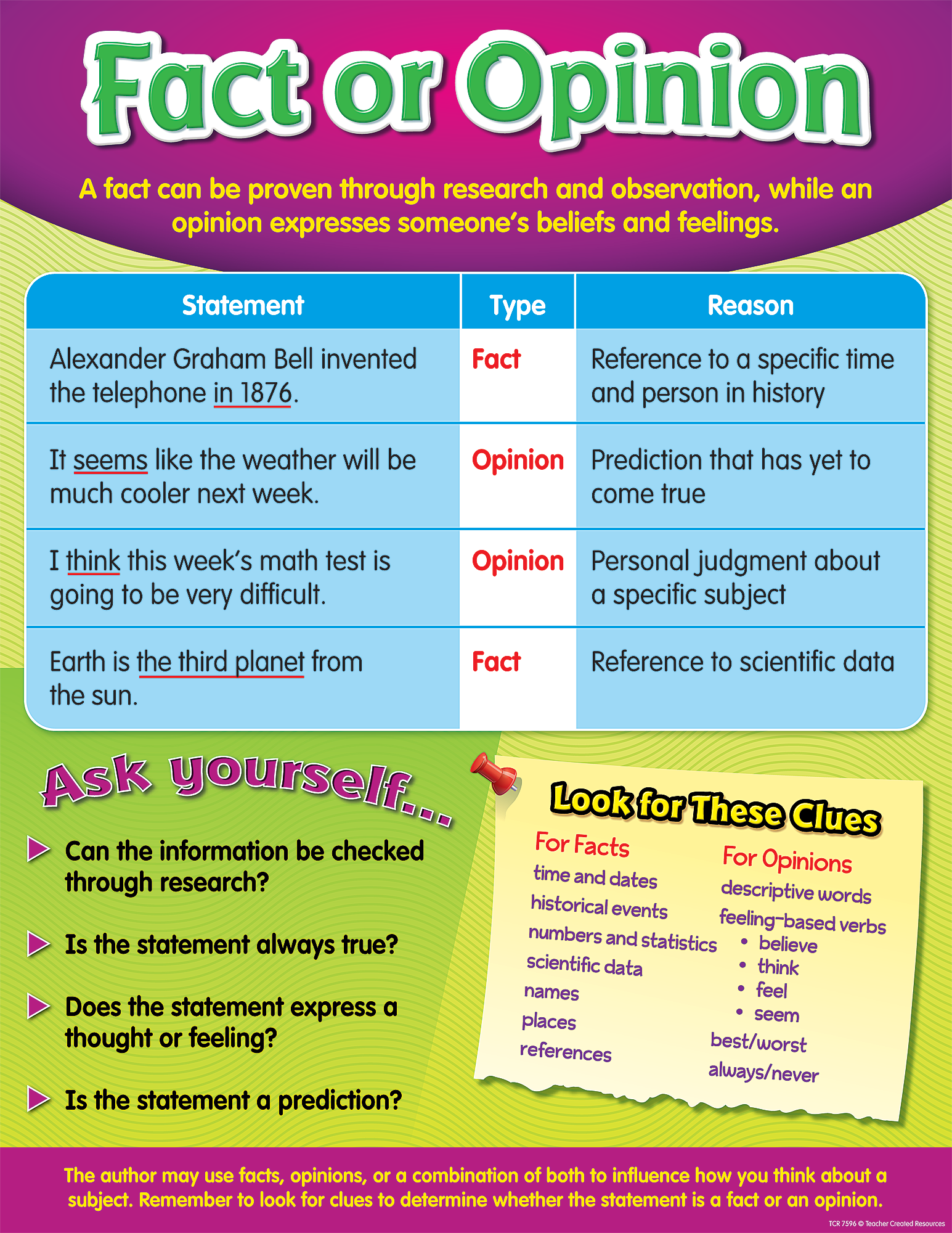
Fact vs opinion worksheets are an invaluable resource for teaching children a crucial skill: distinguishing between facts and opinions. This skill is not only essential for academic success but also for developing critical thinking abilities and navigating the world with a discerning eye. By practicing with these worksheets, students learn to recognize the difference between objective, evidence-based claims and subjective personal beliefs.
Lesson on fact vs opinion for young learners.
Beyond Black and White: Shades of Gray in Fact and Opinion Worksheets
While fact vs opinion worksheets primarily focus on helping students identify the difference between facts and opinions, they also offer a more nuanced understanding of language and expression. These worksheets often present scenarios or statements that require students to think critically and analyze the context to determine whether it is a fact or an opinion. This process encourages students to consider the shades of gray between absolute truth and personal perspective.
Fact vs opinion: a duck-themed printable activity.
For instance, a statement like "The sky is blue" might seem like a fact, but in some cultures or artistic contexts, it could be interpreted as an opinion or a subjective description. By exploring such examples, students learn to evaluate the evidence supporting a claim and understand the role of context in shaping our perceptions.
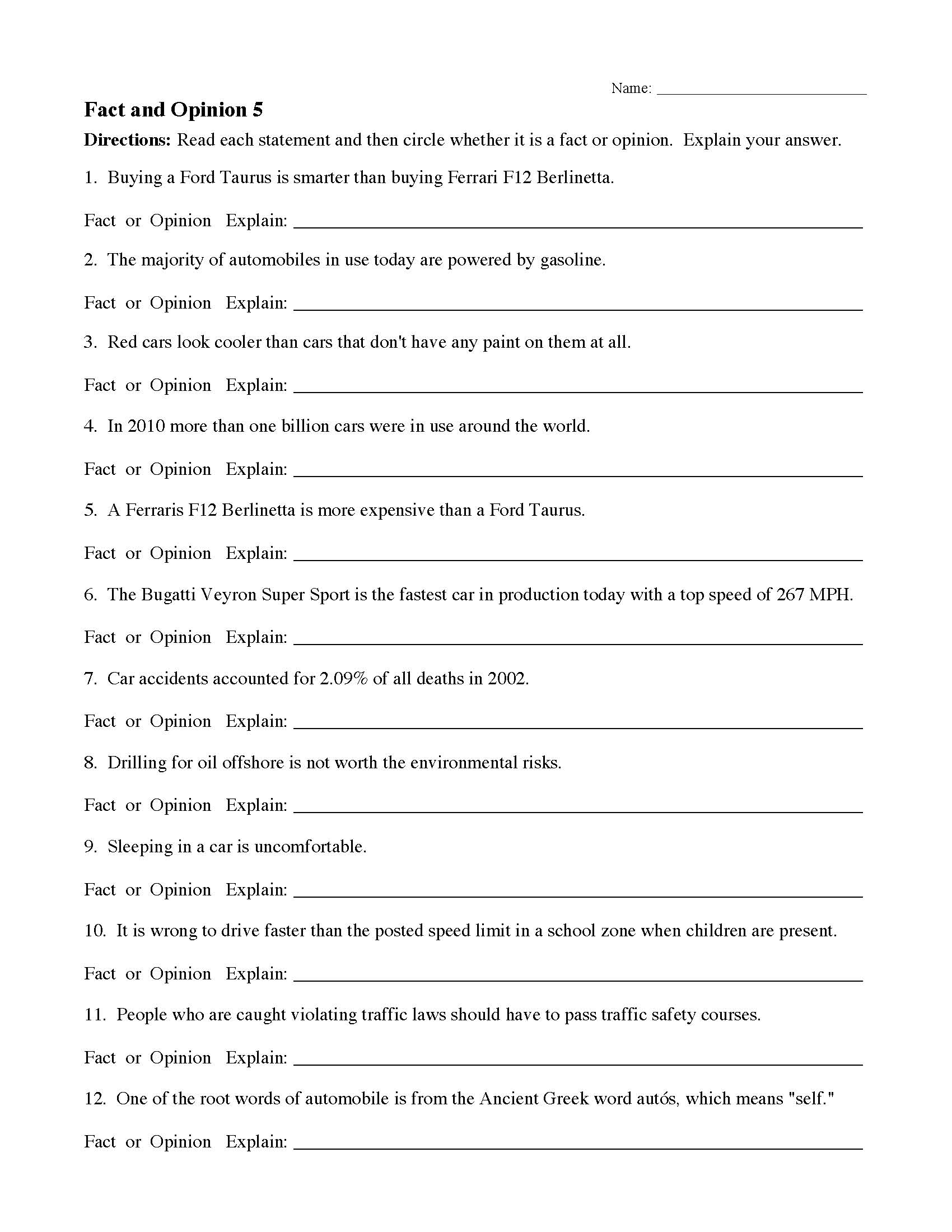
Fact or opinion writing: a comprehensive worksheet.
People Also Ask: What Are Some Common Challenges in Teaching Fact vs Opinion?
One of the challenges teachers and parents face is helping students understand that facts and opinions are not always presented explicitly as such. Often, opinions are disguised as facts, especially in persuasive writing or media. Teaching students to recognize subtle cues, such as the use of emotive language or subjective terms, is crucial for developing their critical literacy skills.
Reading comprehension: fact and opinion practice.
Fact vs opinion worksheets can address this challenge by providing a range of practice scenarios, including real-world examples from news articles, advertisements, or literary texts. By analyzing these sources, students learn to identify the underlying biases and distinguish between objective reporting and subjective commentary.
Sports-themed worksheet: fact vs opinion challenge.
How Can I Incorporate Fact vs Opinion Worksheets into My Teaching or Homeschooling Practice?
Incorporating fact vs opinion worksheets into your teaching or homeschooling routine is straightforward and flexible. Here are some practical tips:
Fact vs opinion: a simple, effective worksheet.
- Start with Simple Examples: Begin with worksheets that present clear, distinct facts and opinions. This foundation will help students grasp the basic concept before moving on to more complex scenarios.
Advanced fact or opinion practice for older students.
- Progressively Increase Difficulty: As students become more comfortable, introduce worksheets with more nuanced or ambiguous statements. This gradual progression challenges students to apply their understanding in increasingly realistic contexts.
Fact or opinion worksheet for teenagers.
- Encourage Group Discussion: Fact vs opinion worksheets can be a great springboard for class discussions. After completing a worksheet, have students share their reasoning and explain their choices. This promotes active engagement and allows students to learn from each other's perspectives.
Free 3rd grade fact vs opinion printable.
- Integrate with Other Subjects: Fact vs opinion skills are applicable across various subjects. For instance, in history class, students can analyze primary sources to distinguish between factual accounts and personal interpretations. In science, they can evaluate experimental results and determine whether conclusions are based on evidence or speculation.
Fact vs opinion: a straightforward practice sheet.
- Make It Fun: Fact vs opinion worksheets don't have to be dry or repetitive. Incorporate interactive elements, such as games or role-playing activities, to keep students engaged. For example, create a "Fact or Opinion" scavenger hunt where students search for examples of facts and opinions in their environment or in a given text.
Create your own fact vs opinion worksheet.
Fact vs Opinion Worksheets: A Foundation for Critical Thinking and Data-Driven Decisions
By practicing with fact vs opinion worksheets, students develop a crucial foundation for critical thinking and evidence-based decision-making. This skill extends beyond the classroom, empowering students to navigate the information-rich world with discernment.
In an era where misinformation and biased narratives are prevalent, the ability to separate facts from opinions is a powerful tool. Fact vs opinion worksheets help students become more discerning consumers of information, enabling them to make informed choices and contribute to a more informed society.
Furthermore, the skills learned through these worksheets have practical applications in various real-life scenarios. For example, when evaluating news articles or social media posts, students can apply their fact-checking abilities to discern reliable sources from biased or misleading information. This critical approach to information consumption is a valuable life skill that extends far beyond the classroom.
As students progress in their understanding of facts and opinions, they can also explore related concepts, such as point of view. 21 Point of View Worksheets offer a natural progression, helping students analyze how different perspectives shape our understanding of events and narratives. By combining these skills, students develop a well-rounded approach to interpreting and evaluating information, fostering a deeper appreciation for the complexity of language and expression.
So, there you have it! Worksheets are a fun and interactive way to empower our little ones with some serious life skills. It's an easy, effective method to ensure they can spot the difference between facts and opinions, which is a skill that will serve them well throughout their lives.
Why not give it a go and see how your kids respond? It's a great way to engage them in a meaningful activity, and you might just be surprised at how quickly they pick it up. Leave a comment or share your experience below - we'd love to hear how it goes!
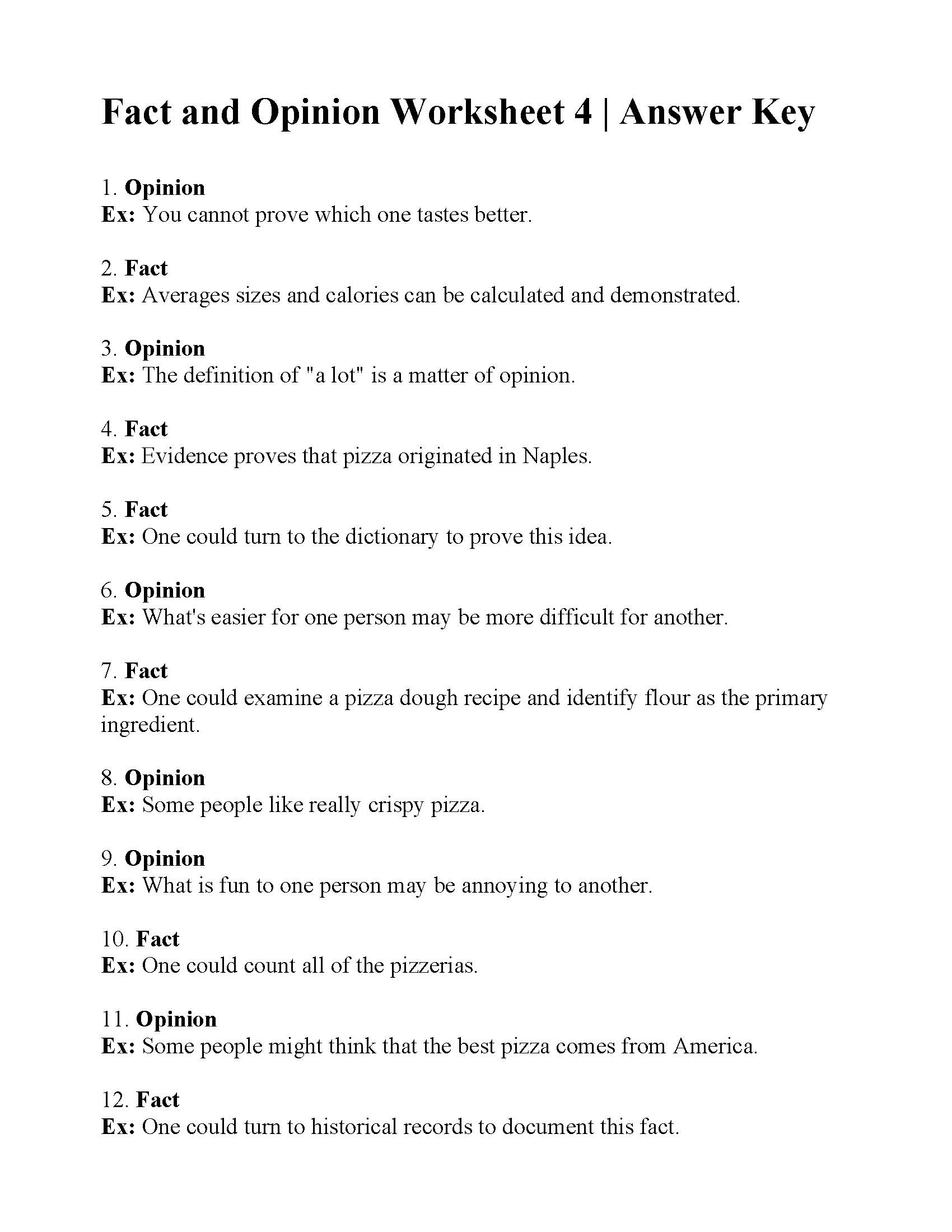
Fact or opinion? A clear example and practice sheet.
Read also: 27 Free 3rd Grade Reading Worksheets
Related: 14 Subtraction Worksheets for 2nd Grade
Sometimes, finding the right resources for our kids' learning journey can be a bit of a challenge, especially when it comes to math. 2nd grade subtraction worksheets can be a lifesaver for parents and teachers alike, offering a simple yet effective way to reinforce those early subtraction skills. These worksheets, like our subtraction worksheet grade 2 printable, provide a structured approach, making it easier for kids to grasp the concept and practice at their own pace. It's a great way to build confidence, and it can even be a fun activity! Check out our 16 Beginning Sounds Worksheets for Kindergarten for more learning resources.
Fun math practice for second graders.
Mastering Early Subtraction: A Practical Approach
Math practice fun is all about engaging young learners in a way that feels more like play than work. One of the most effective tools for this is the 2nd grade subtraction worksheets, which offer a structured yet enjoyable way to reinforce early subtraction skills. These worksheets provide a solid foundation for mastering basic subtraction, making them a valuable resource for teachers, parents, and homeschooling educators alike.
Grade 2 subtraction, 12-page set.
Beyond Basic Subtraction: Building Confidence with Progressive Worksheets
While the focus is on simple subtraction tasks, these worksheets offer a progressive learning journey. They start with easy math problems, gradually introducing more complex concepts and challenges. For instance, a subtraction worksheet grade 2 printable might begin with single-digit subtraction, then move on to two-digit numbers, and eventually cover subtraction with regrouping, a crucial step in mastering early math. This progressive approach ensures that learners build confidence and a solid understanding of the concept before moving on to more advanced topics.
Second grade math, ready to print.
People Also Ask: What's the Ideal Age Range for These Worksheets?
A common question about 2nd grade subtraction worksheets is whether they are suitable for a specific age group. While they are primarily designed for second graders, these worksheets can be adapted for slightly younger or older learners. For instance, advanced first graders might find them a great challenge, while some third graders could benefit from revisiting these basics to reinforce their understanding. The beauty of these worksheets is their adaptability, making them a versatile tool for a range of learners.
Addition and subtraction for beginners.
How to Get the Most Out of 2nd Grade Subtraction Worksheets
When using 2nd grade subtraction worksheets, it's important to consider the learner's needs and preferences. For instance, some children might prefer a more hands-on approach, using manipulatives like counters or blocks to solve problems. Others might enjoy the simplicity of a traditional pencil-and-paper method. Additionally, teachers and parents can vary the pace, offering more challenging worksheets as learners show progress or providing additional support for those who need it. The key is to create a positive and engaging learning environment, where children feel motivated to explore and understand math concepts.
Colorful math worksheets for grade 2.
A Fun Learning Journey: Subtraction as a Game
One of the most effective ways to make math practice fun is to turn it into a game. 2nd grade subtraction worksheets can be a great starting point for creating engaging math games. For example, teachers or parents can create a simple board game where children roll a die and move their piece, answering subtraction questions along the way. Or, a simple "Number Differences Game" can be created, where children draw two cards, subtract the smaller number from the larger one, and the first to reach a predetermined number wins. These games not only make learning fun but also reinforce the skills learned from the worksheets, creating a well-rounded and enjoyable learning experience.
Free math drills, subtraction focus.
In addition to math, language arts is another crucial subject for young learners. To further enhance their learning journey, check out 16 Language Arts Worksheets for Everyday Practice, which offers a range of engaging activities to develop literacy skills.
Color by number, addition and subtraction.
Whether used in the classroom, for homeschooling, or as a supplement to tutoring, 2nd grade subtraction worksheets provide a versatile and effective way to teach basic subtraction skills. With their structured yet flexible approach, these worksheets offer a solid foundation for early math learning, making them an invaluable resource for educators and parents alike.
Printable math for second grade.
Math for early grades, 1-2.
Free math worksheets, grade 2.
Timed drills for third grade math.
Printable math, grade 2 worksheets.
Well, there you have it! These worksheets are a fantastic way to make math an enjoyable adventure for your little ones. Remember, learning should be fun, and these resources offer a great opportunity to engage and motivate young mathematicians.
So, why not give it a go? Print out a few worksheets, gather some eager second graders, and watch their subtraction skills soar. It's a simple yet effective way to make a difference in their math journey. Leave a comment or share your experience below; we'd love to hear how it goes!
Math drills for young learners.
Read also: 21 Multiplying 2-digit By 2-digit Worksheets