
I've always found it fascinating how nature works its magic, especially with creatures like the jumping spider. Their molting process is quite the spectacle! It's like they're shedding their old selves to embrace a new, more vibrant life. I mean, who doesn't love a good transformation story, right? Especially when it's as visually striking as a jumping spider molting video. It's like watching a mini-documentary unfold right in your backyard!
A jumping spider's first molt begins.

The Metamorphosis: A Spider's Rebirth
Jumping spiders undergo a remarkable transformation during their molting process, which is a true testament to nature's wonders. This rebirth sequence is an essential part of their growth and development, offering a fresh start and renewed agility.
Unveiling the Molting Mystery
The molting process is a complex and fascinating journey for these arachnids. It involves the shedding of their exoskeleton—a protective outer layer—to make way for a new, larger one. This process is not just a simple skin shedding; it's a carefully timed and intricate event, ensuring the spider's survival and growth.

Bold spider's growth journey: A molting mystery.

Tina's molt: A fascinating jumping spider transformation.

An unfortunate molting incident: A spider's struggle.

Baby spider's fate: Molting or death?
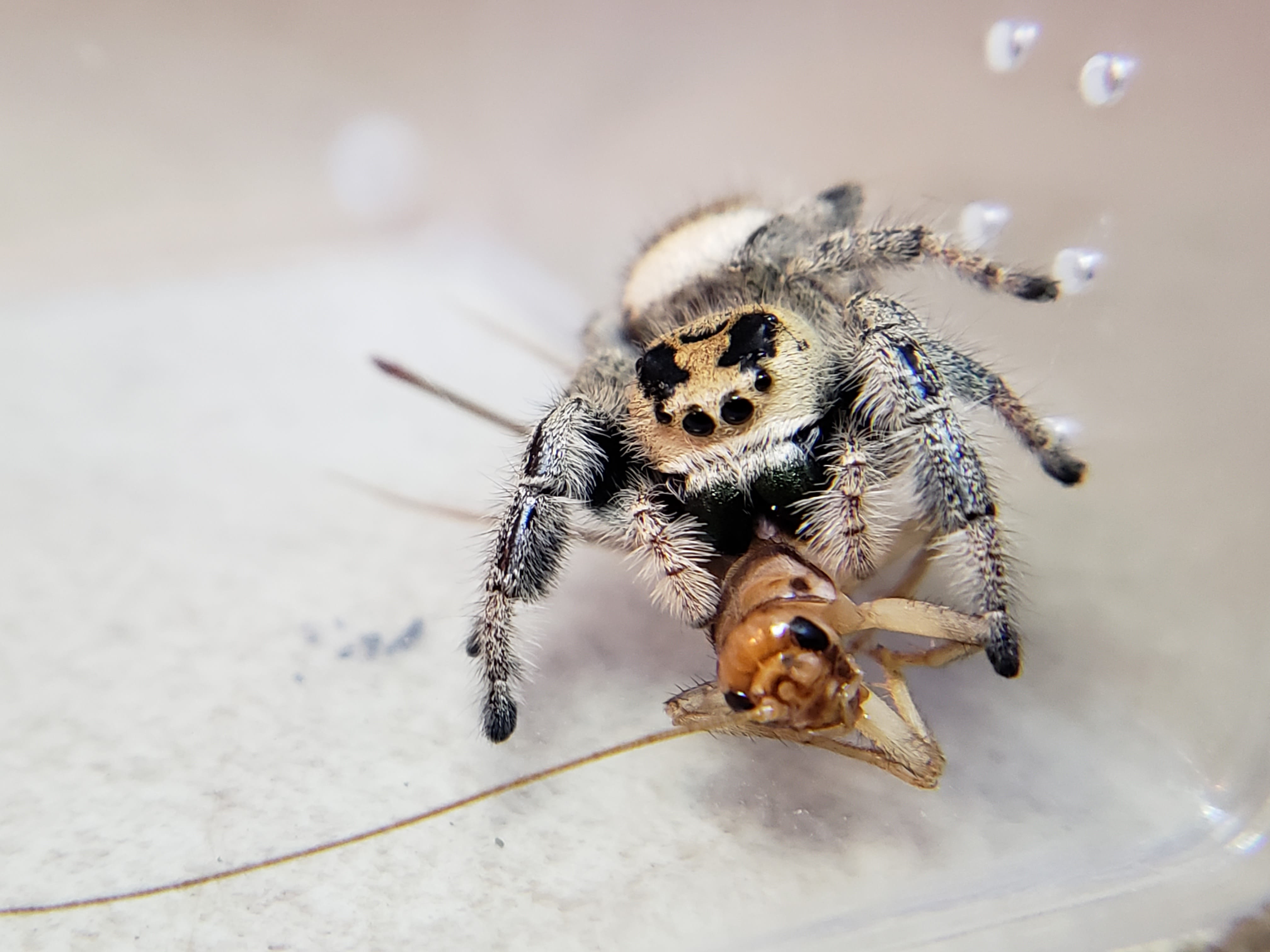
The jumping spider's mating dance: More than meets the eye.

Is it molting? A common spider question.

Bright colors emerge after a successful molt.

Regal spider's molt: No web needed.

Identifying a spider: A tricky task.

Early instar molting process: A close-up view.

New spider owner seeks help: Molting or dying?
Why Do Jumping Spiders Molt?
Molting serves multiple purposes for jumping spiders. Firstly, it allows them to grow and develop, as their exoskeletons are non-living and cannot expand like our skin. So, by shedding and replacing it, they can increase in size and strength. Secondly, molting helps maintain their health and appearance. Old exoskeletons can become damaged or worn, so a new one ensures they remain agile and vibrant.
How Often Do Spiders Molt?
The frequency of molting varies with age and species. Young spiders, or spiderlings, may molt several times in their first year as they grow rapidly. Adult spiders, however, molt less frequently, typically once or twice a year, depending on their environment and diet. The molting cycle is influenced by factors like temperature, humidity, and food availability.
A Practical Guide to Spider Molting
If you're raising a bold jumping spider as a pet, understanding their molting process is crucial. Provide a suitable environment with the right humidity and temperature conditions to encourage a successful molt. During this time, your spider may become less active and more reclusive, so it's best to minimize handling and disturbances. Ensure they have access to water and a nutritious diet to support their growth.
Embracing a New Lease of Life
The molting process is a true showcase of nature's brilliance, offering jumping spiders a chance at a fresh start. It's a time of vulnerability but also a period of immense growth and transformation. Witnessing this process, whether in your backyard or through a jumping spider molting video, is a unique and captivating experience, reminding us of the beauty and resilience of life.
Wow, who knew spiders could be so captivating? It's incredible to witness nature's magic through these tiny creatures and their transformative abilities. It just goes to show that even the smallest beings can teach us a lot about resilience and rebirth.
So, the next time you spot a jumping spider, take a moment to appreciate the incredible process they've undergone. Leave a comment and share your own spider stories or any fascinating creature encounters you've had!
Molting: A common query for spider owners.

Read also: The Magic E Worksheet