As a parent, I'm always on the lookout for fun and engaging ways to help my kids learn. Author's purpose worksheets are a brilliant tool for that! These printable resources are a lifesaver for parents and teachers, especially when you need a quick activity to reinforce a reading skill. For instance, check out these free printable author's purpose worksheets here for a fun and educational activity!
Activities and worksheets for author's purpose.

Understanding the Author's Purpose
When it comes to reading comprehension, one crucial aspect that often gets overlooked is understanding the author's purpose. This skill is essential for readers of all ages, as it allows them to analyze and interpret texts more deeply. By recognizing the author's intent, readers can make meaningful connections, draw insights, and engage critically with the material.

Worksheet: find the author's reason for writing.
Uncovering the Author's Intent: A Powerful Skill
The author's purpose worksheet is a versatile tool that helps learners develop this critical skill. It provides a structured approach to analyzing texts and encourages readers to think beyond the surface level. Through targeted questions and activities, these worksheets guide students in identifying the author's primary goal, whether it is to inform, persuade, or entertain.
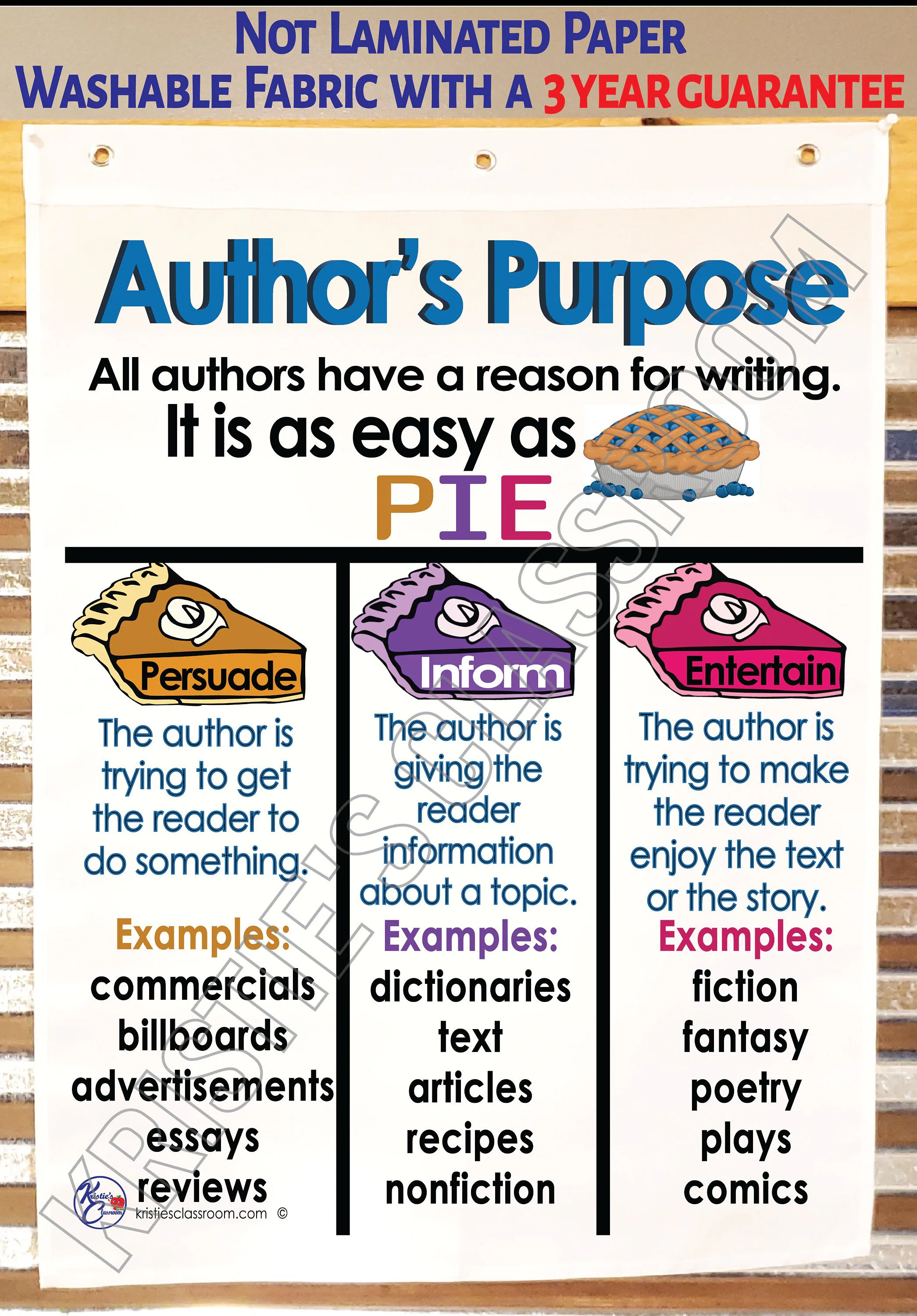
7th grade quiz: text structure and author's intent.
For instance, a simple exercise might ask students to examine a passage and determine whether the author is primarily aiming to provide factual information or express an opinion. This helps students differentiate between informative and persuasive writing, a crucial distinction in critical reading.

Free printable: identify author's purpose (3rd grade).
People Also Ask: What Are Some Common Author's Purposes?
Understanding the author's purpose is not just about recognizing a few simple categories. It involves a nuanced understanding of the author's intent and the various ways they can engage readers. Here are some common author's purposes that students may encounter:

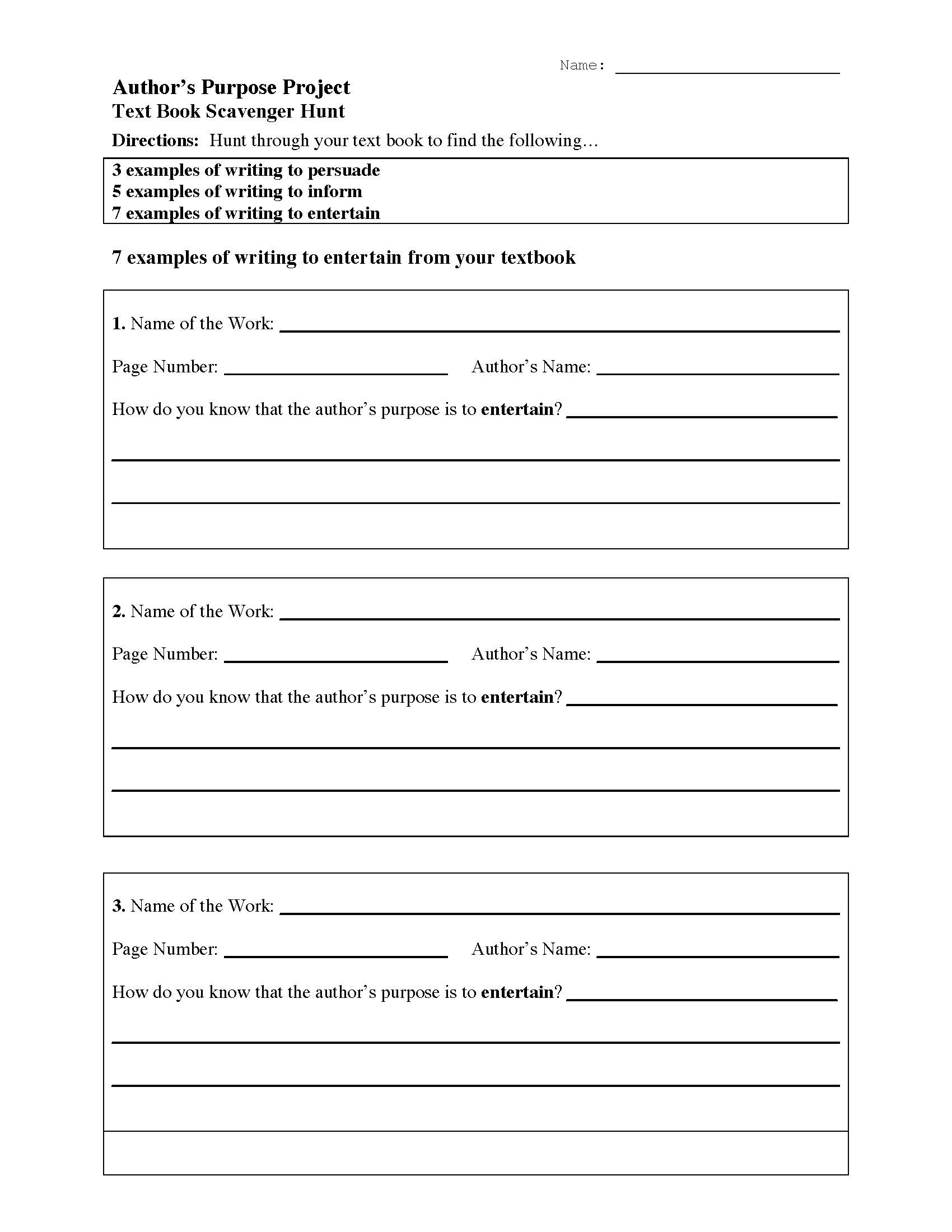
Author's purpose: printable worksheets for practice.
- Inform: Authors often aim to educate readers by providing factual information, explaining concepts, or sharing knowledge. This type of writing is prevalent in textbooks, how-to guides, and scientific articles.
- Persuade: Persuasive writing is designed to convince readers of a particular viewpoint or encourage them to take a specific action. It is commonly found in advertisements, editorials, and political speeches.
- Entertain: Authors may also write to amuse or captivate their audience. This type of writing is prevalent in fiction, poetry, and creative non-fiction, where the author's goal is to engage readers through storytelling or imaginative language.
- Describe: In some cases, authors focus on creating vivid descriptions to paint a picture in the reader's mind. This purpose is often seen in descriptive passages, nature writing, and sensory-rich narratives.
- Inspire: Inspirational writing aims to motivate and encourage readers, often by sharing personal stories, offering wisdom, or providing a unique perspective. This type of writing can be found in motivational books, personal essays, and certain types of poetry.
- Argue: Authors may also present a logical argument, backing it up with evidence and reasoning. This style is common in academic writing, debates, and legal documents.

Digital escape room: author's purpose activities.
How to Use Author's Purpose Worksheets: A Practical Guide
Now, let's explore how you can effectively utilize author's purpose worksheets in various learning scenarios. Whether you're a teacher, parent, or tutor, these worksheets can be a valuable addition to your teaching toolkit.
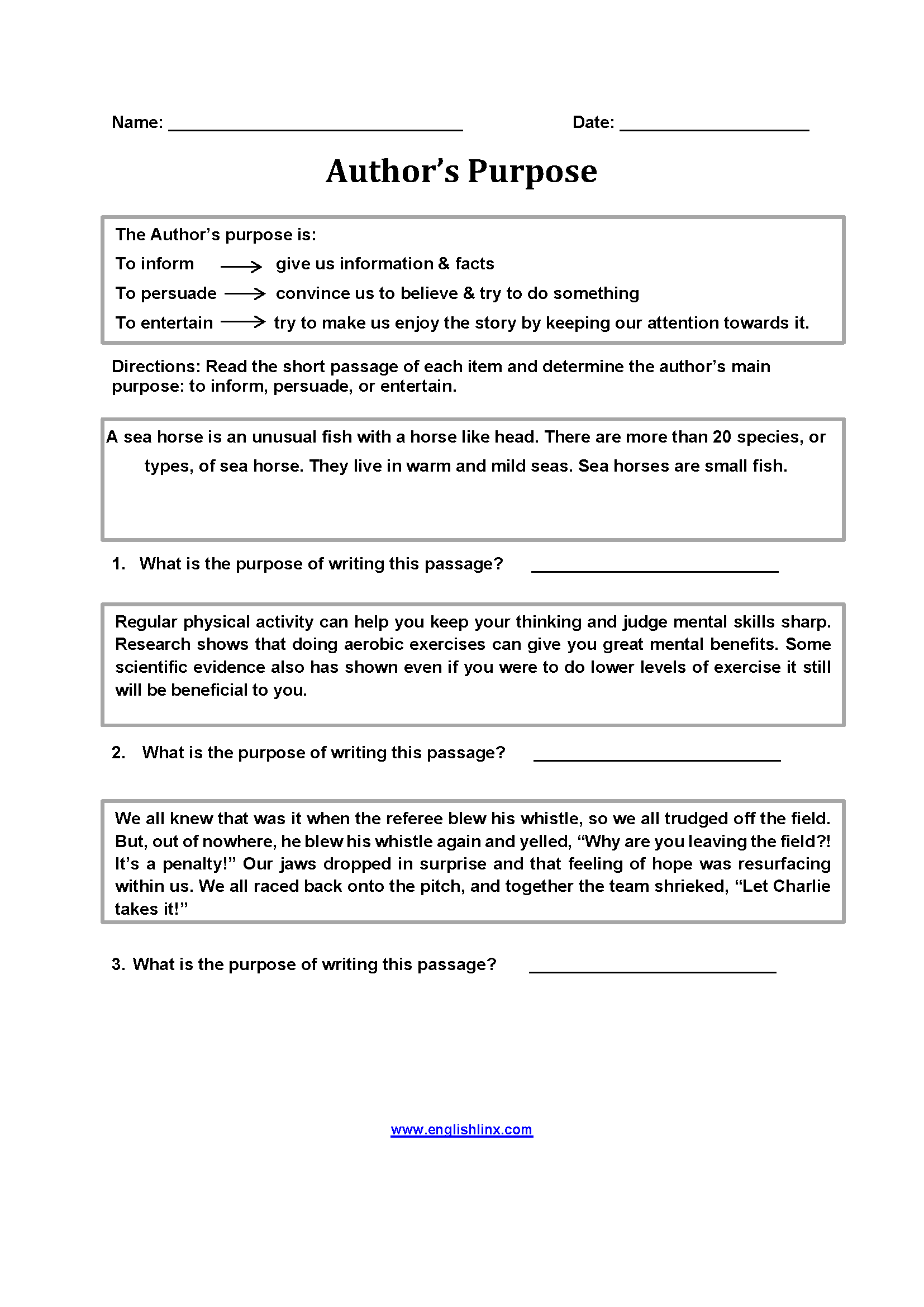
Englishlinx: worksheets on author's purpose.
First, it's essential to choose worksheets appropriate for your learners' age and grade level. For younger students, simpler exercises focusing on basic purposes like informing and entertaining are ideal. As students progress, you can introduce more complex worksheets that explore multiple purposes and encourage critical thinking.
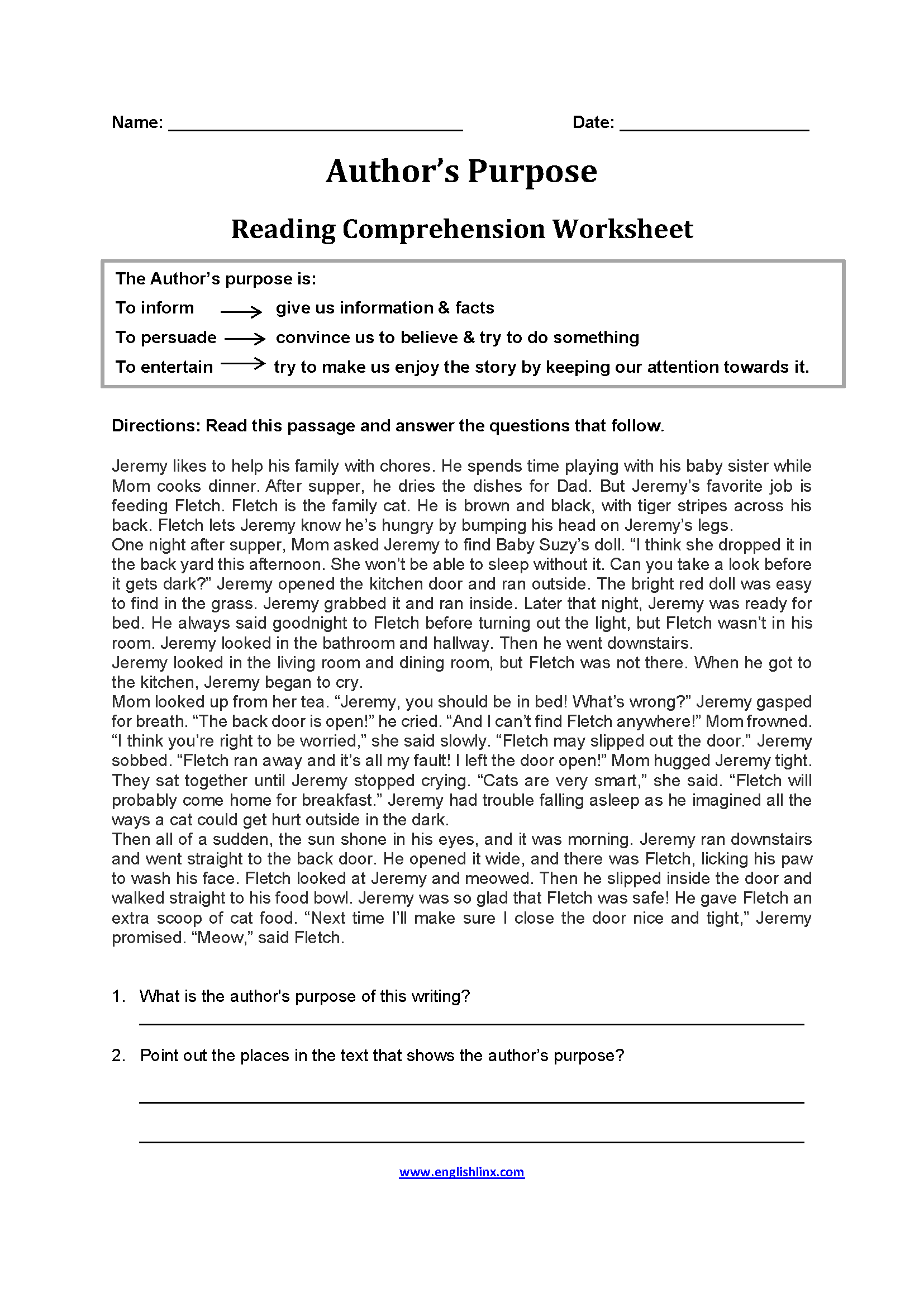
Reading: understanding author's purpose worksheets.
When using these worksheets, it's beneficial to provide a variety of text types. Include excerpts from fiction and non-fiction books, magazine articles, advertisements, and even song lyrics. This diversity helps students recognize that author's purpose can vary widely across different genres and media.

Kids worksheet: author's purpose and its effects.
Here's a step-by-step guide to using author's purpose worksheets:
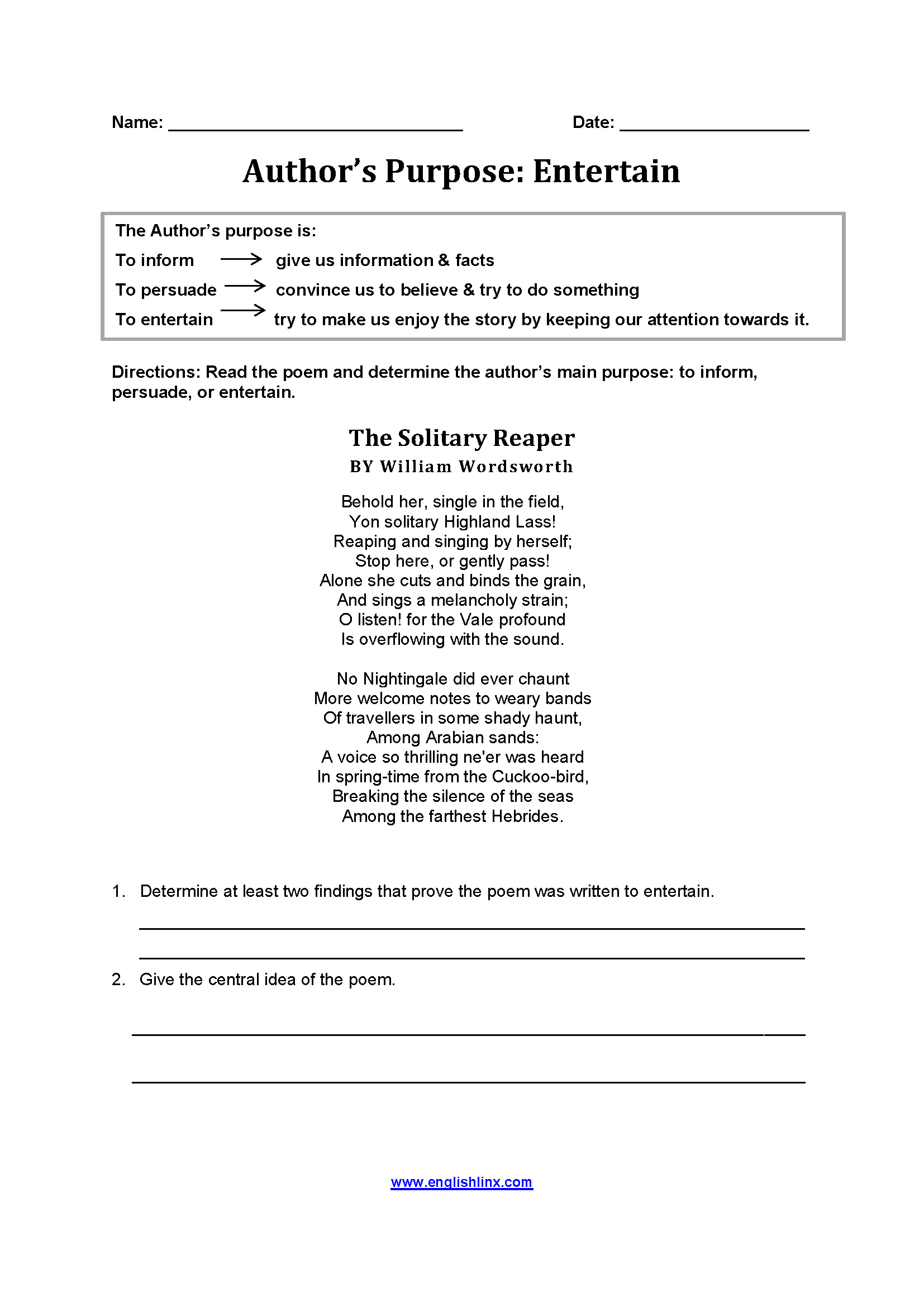
Englishlinx: more worksheets on author's intent.
- Select a Text: Choose a passage or text that aligns with your learning objectives and the skill level of your students. Ensure it is engaging and relevant to their interests.
- Introduce the Worksheet: Provide a brief overview of the author's purpose concept and its importance in reading comprehension. Explain the different purposes authors might have and how they impact the reader's experience.
- Read and Analyze: Have students read the selected text carefully. Encourage them to highlight or make notes on key phrases or sections that reveal the author's intent.
- Complete the Worksheet: Guide students through the worksheet, explaining each question or activity. Provide support and clarification as needed, especially for more complex tasks.
- Discuss and Reflect: After completing the worksheet, facilitate a class discussion or small group sharing session. Encourage students to share their insights and compare their interpretations. This collaborative reflection deepens their understanding and reinforces the skill.
- Practice and Progress: Regularly incorporate author's purpose worksheets into your teaching routine. Gradually increase the complexity of the texts and worksheets as students become more proficient. This progressive approach ensures they develop a strong foundation in this critical reading skill.
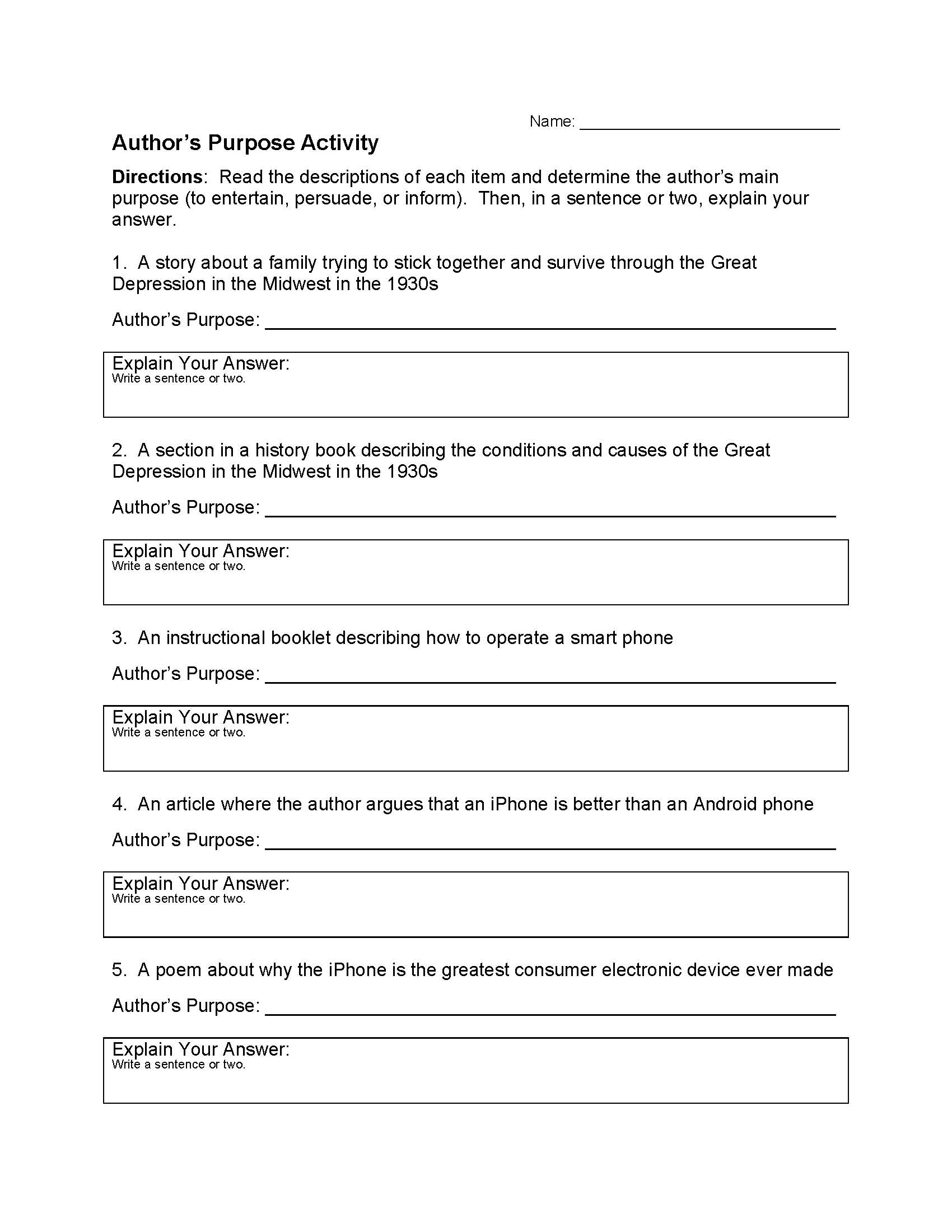
Reading skills: analyzing author's purpose.
Inspiring Critical Readers: The Benefits of Author's Purpose Practice
By incorporating author's purpose worksheets into your teaching or learning routine, you empower students to become more critical and engaged readers. This skill not only enhances their reading comprehension but also fosters a deeper appreciation for the power of language and the art of writing.
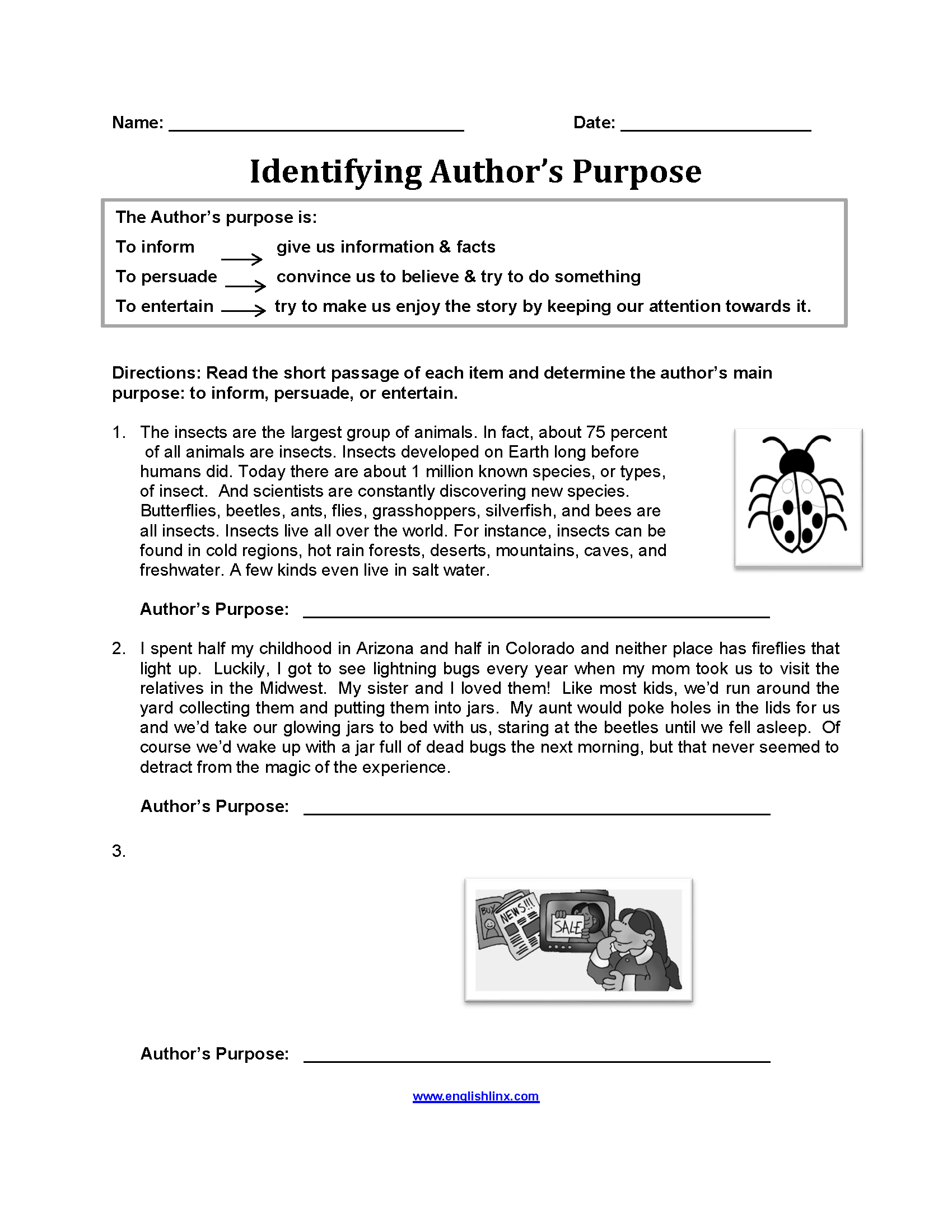
Identifying author's purpose: worksheet practice.
As students become adept at recognizing author's purpose, they develop a more nuanced understanding of the texts they encounter. They learn to question, analyze, and interpret, developing essential critical thinking skills that extend beyond the classroom.
Moreover, author's purpose practice encourages students to consider the broader context of a text, including the author's intent, audience, and cultural or historical influences. This holistic approach to reading promotes a more well-rounded and thoughtful engagement with literature and media.
In conclusion, author's purpose worksheets are a versatile and effective tool for teaching critical reading skills. By guiding students to recognize the author's intent, these worksheets empower them to become more engaged, thoughtful readers who can navigate the diverse landscape of texts with confidence and insight.
So, there you have it! Understanding an author's purpose is a fun and rewarding skill to develop. It's like putting on a new pair of glasses that lets you see the world of literature in a whole new light.
Why not give it a go and see how it transforms your reading experience? You might just find yourself enjoying books and articles even more. And hey, if you want to dive deeper, there are some awesome worksheets out there to practice with. Just a suggestion, but feel free to explore and find the ones that resonate with you!
Leave a comment or share your experience below. I'd love to hear how this journey of discovery goes for you!
Reading skills: identifying author's intent.
Read also: 20 Free 6th Grade Worksheets